Posts

Showing posts with the label kayaking

What makes flatwater kayaking so unique

Image
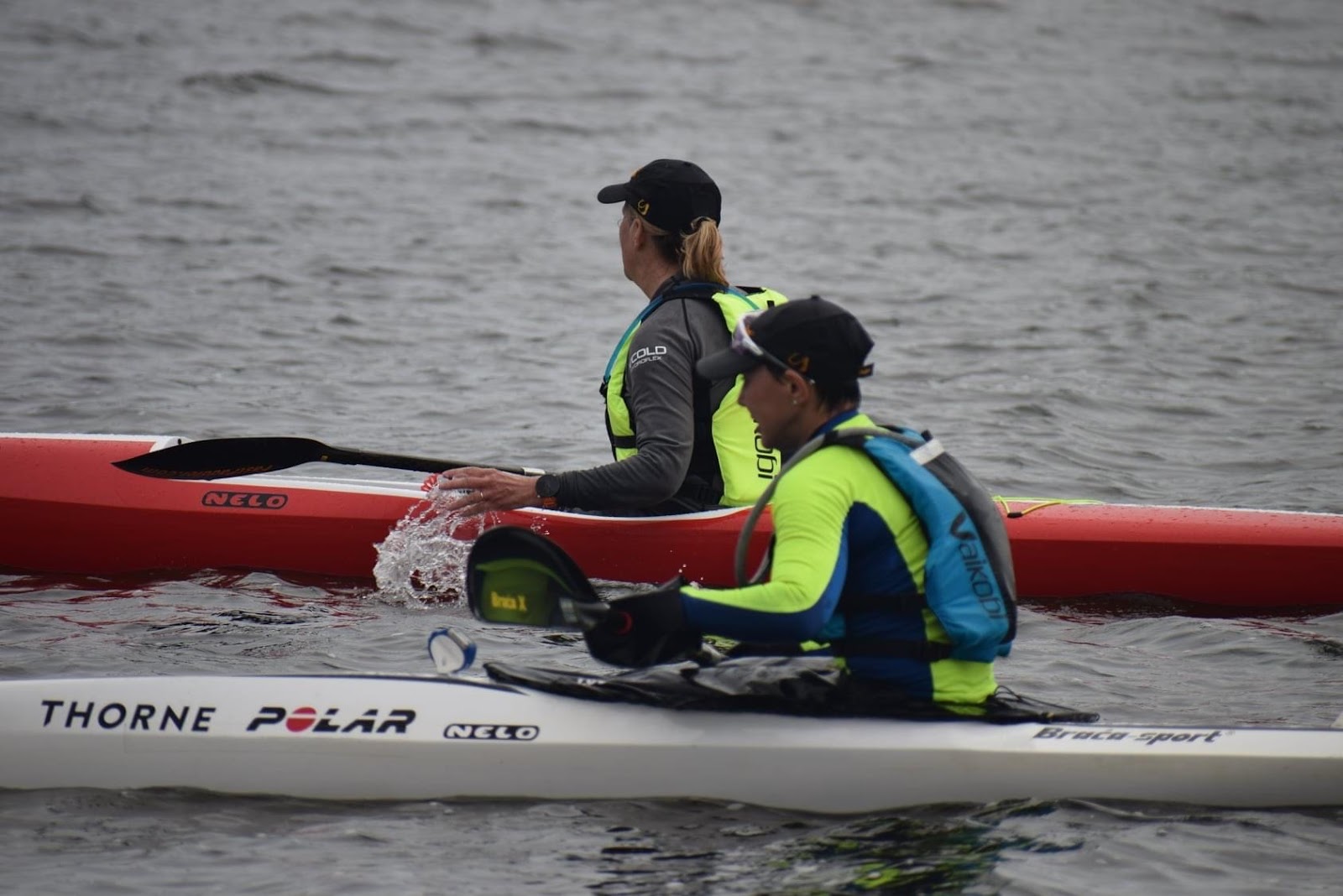
When learning something new, progress almost never happens in a linear fashion. In many sports, the learning curve varies depending on the individual and their ability to adapt to the new stressors that typically involve a combination of physical and mental engagement. Flatwater kayaking is a little different.  Learning how to paddle efficiently is a life long process. It combines gradual neuromuscular and psychodynamic adaptations in conjunction with strength/power and endurance development. And because all those elements play their significant role into paddling speed and efficiency, the progress is far from being linear. Farther than any other sport in my opinion.  Improvements in power, speed and endurance can be monitored in a more straightforward way - similarly to weight lifting or running and cycling. However, the improvements in neuromuscular and psychological adaptations, the feel for the water, the balance and relaxation on the boat, the right body coordination and ...

The magic feel of finding the water

Image
Water can be soft and gentle like air. When you float or paddle on it can sometimes feel like flying. But water can also be hard and painful. When you dive off a ten-meter platform it can actually hurt you like hitting a concrete wall.   This is what makes this element so fascinating because when pressure is applied on it, forces always counteract that pressure. For many water related activities such as swimming, kayaking or rowing (just to name a few), it takes an incredible tactile or sensory ability to feel and understand how the water behaves when applying various pressures with palms, paddles, oars or other equipment at various angles and at various water currents, air winds, temperatures or other environmental factors. Finding the feel of the water Feeling the water, holding it, squeezing it or however you want to call it, describes an almost magical ability to understand how to apply pressure on the water, use the counteracting force in the most productive way, gain tra...

The speed training and other myths that are slowing you down

Image
Speed training is an essential component of performance in many racing sports but it is often butchered. Ideas, methods and personal opinions of training schemes and speed training methods that are not supported by science or consistent results are still far too common. I thought it may be fun to outline below a few myths related to endurance and speed-endurance in sports including kayaking and how these may actually block you from progressing and getting faster. Myth 1 : Higher average speed at training days or races means you are getting faster Being able to generate faster speeds for a longer time may increase your average speed or even top-end speed on a training day or during a race. Observing such metrics is not a bad idea, however, these should be put in the right context and within a carefully outlined training plan. They should be part of monitoring progress in the long haul and not be indicative of performance (either personal or boat-specific) during random training days or...

The physiology and human performance across sports

Image
The human body has unlimited potential. We are lucky enough to live in an era where sports physiology has been studied and applied for a long time and has demonstrated with scientific rigor how exercise duration, intensity and frequency can affect muscle composition, capacity, efficiency, energetics and ultimately, human performance. Kayaking shares many aspects with swimming because they are both highly technical sports and require a vast cardiovascular capacity and engagement across all types of muscle fiber no matter the distance or duration of the event. In terms of performance, there is always a fine balance between technique , muscle development (and proper engagement) and cardiovascular ability . The holy triad of any sport as I call it, gives us the opportunity to continue to grow as athletes in any and all of those three aspects continuously. All three are tightly interconnected and while during specific training periods we may focus more on one or another, they all deserve at...

Into Big Changes and Breaking Stereotypes

Image
I grew up in Greece, in one of the oldest and more traditional societies in Europe. Exactly where big changes rarely happen in people's lives. In Greece, you grow up in a house or apartment with your parents and siblings, and with grandparents, aunts, uncles and cousins around and on top of each other. You finish school, go to a technical or academic college nearby, specialize in an area, get a job, get married and live with spouse and kids in the same town you were born or maybe in a town a few miles away. And although this is a lovely way to lead a life, offer to the society, feel secured and beloved and maybe do great things, it is very limiting and can be truly unbearable for the more curious, adventurous and rebellious mindsets.  At the age of 23, although full of passion and restlessness, I wasn't quite en route to start a revolution but at the same time, I felt I couldn't quite fit in such a culture. I was constantly judged and rejected within my family, my schoolmat...