Posts

A mature athlete has the right mindset

Image
Maturing as an athlete is a lot more than just getting faster or becoming more efficient. I believe that what makes an athlete mature is a great mindset.  From my own small-world perspective, my athletic attitude has changed dramatically over the years. I remember my first season that started in October 2011: I was restless. I wanted to train every day. The more the better. I was getting excited with every little success, from clocking faster 5K times every month to winning the smallest local race in town. I was also getting depressed easily: whenever my knee was hurting or my shoulder was pinching. I was becoming really pessimistic if I had to take time off training in order to deal with smaller or bigger injuries. I remember I was crying for days when I had to stop swimming for nearly 4 months to rehab my left shoulder from chronic rotator cuff injury: I went to the 2012 Collegiate Nationals having practiced 0 swimming for 4 months (I finished 4th overall). The majo...

The power of Yoga in endurance athletes

Image
I am sure you have heard over and over again how yoga can benefit your endurance sports ambitions. I was myself among those who were reading and hearing about the power of yoga but never really wanted to give it a shot. I was kind of feeling a little out of the whole yoga-spiritual-relaxation kind of attitude. Up until I was suggested to try it by my doctor. I finally have a sort of diagnosis about my chronic injury and an action plan. I have a soft-tissue injury in the connective tissue between my psoas and my illiacus (something that apparently is not detectable with any current visualization methods: MRI, CT scans, Ultrasounds, etc). Lots of reasons may have caused that over the years: office-work lifestyle (I have been reading, writing and working at a desk for as long as I remember myself-from my elementary school years till now), trauma, accidents, etc. Over the years, the lifestyle or an accident or a trauma (which I had so many as a cyclist) had created imbalances that favo...

Patience and Persistence

Image
When it comes to training and racing for a goal or some few goals for the season, things do not always go right. They go left, up or down. Shopping for "going right" this year. Anybody? I spent last year in the shadows, training and racing minimally and trying to fix a problem that killed my running. After tons of exams that only proved my body is in perfect condition and after spending a good amount of six months on the massage table in the hands of Nathan Handerson, I finally got it under control. I got optimistic, I thought that all of my patience and persistence have finally paid off. I started running some pre-season races pain-free. Yes! I thought I got it! Unfortunately, timing is not always right. I am still on the roller-coaster train. Sometimes I am racing pain free and other times with some pain. So, things are not yet right 100%. Therefore, my scheduled training periods have started getting canceled and I started going south. But only for a little while. T...

Can Hard Work outperform Talent?

Image
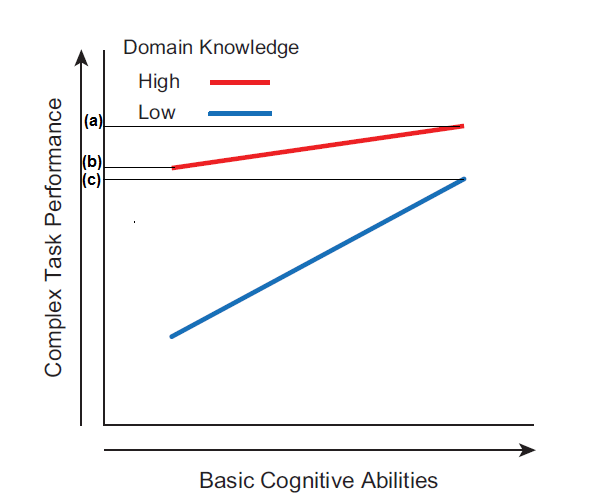
Yesterday, I came across this recent publication in the Association for Psychological Science, written by Hambrick and Meinz*. Quite successfully, the authors illustrate their arguments on the oh-so-debatable, "talent" vs "hard work" for success and performance. The first to introduce this debate scientifically was Dr. Ericsson from Florida State University in 1996. To remind you or inform you if you haven't heard, Ericsson's theory is based on the concept that one needs 10,000 hours in order to acquire expert performance in a field of science, music, art, sport or other complex domains. (more: http://www.psy.fsu.edu/faculty/ericsson.dp.html ) I will not overload you with technical terms and complicated graphs but I will just discuss a little how perplex this matter is. Based on their own research and on a series of experiments, Hambrick and Meinz, conclude that basic abilities (i.e., "talent") can predict success but acquired characteristics (i...

How it feels during the progressive overload training period

Image
Let's first make something clear: Before you jump into an overload training phase, you need to have a coach who understands very well the concept behind the periodization training plan and who can apply it specifically to you and adjust it along the way depending on the circumstances and your unique, personal needs. You can read more about it in one of my previous posts here: The porgressive overload as part of a periodization training plan When it's time to enter the progressive overload period of my training plan, I have just come out from the base and transition periods. The former (base) requires lots of slow, long miles and the latter (transition) lots of sort, power exercises that make different muscle groups work one after the other. Before the overload period, I probably weigh 2 to 4 pounds more, I feel a little tired but not worn out, and I may (or may not!) get a week of easy workouts: every day I would do about 1 hour of easy spin or 20min of jogging or 45m...

Weight lifting for endurance athletes

Image
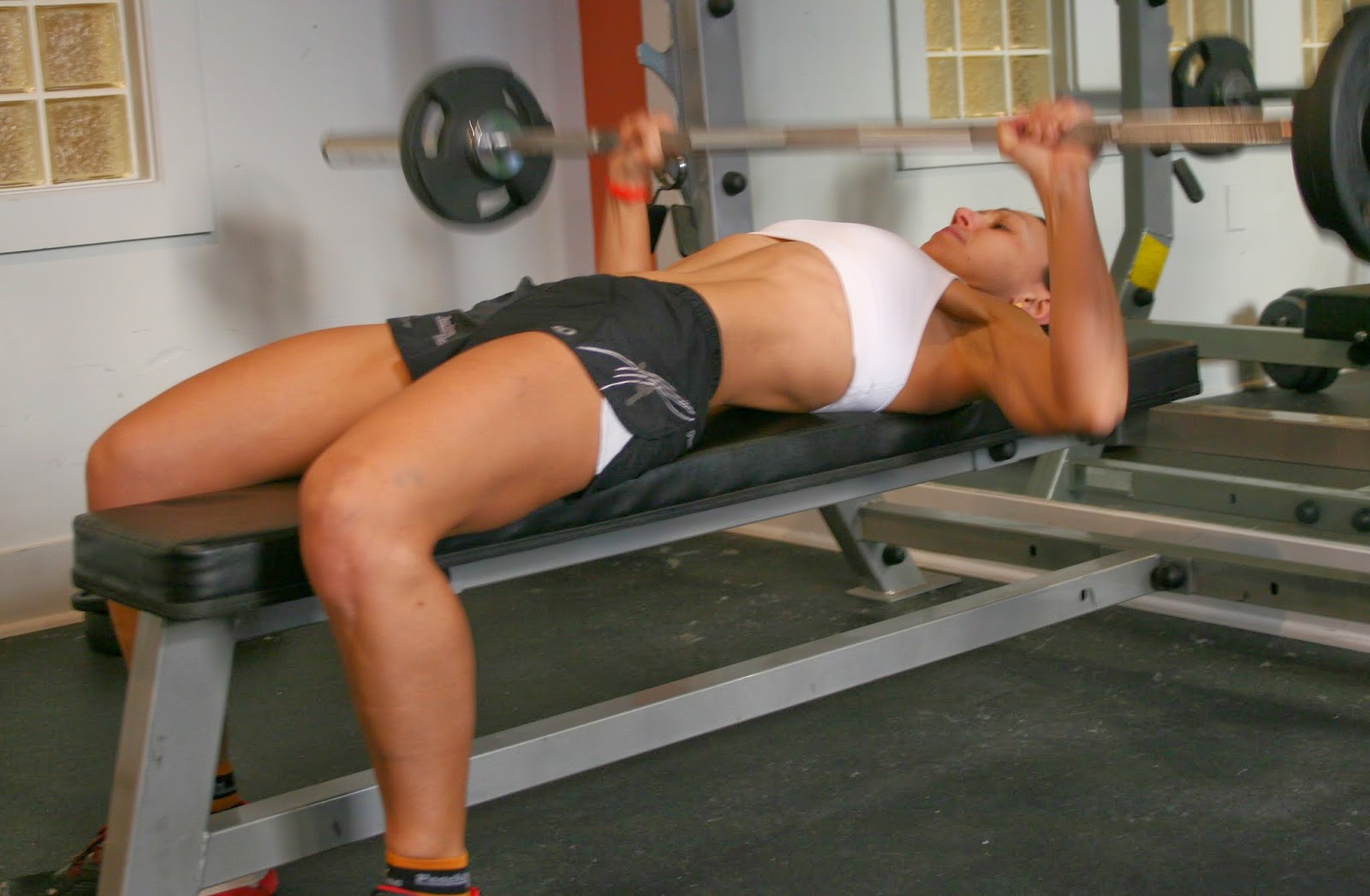
Touching upon one of the most controversial topics on the training of the endurance athlete was not an easy decision but I thought I would do it anyway and share with you all my own experience. Weight lifting: some coaches believe it is necessary and key to success while some others avoid it at all costs. I am not a certified trainer or a coach or someone with education deep enough to explain the physiological benefits of weight lifting. However, I am a competitive athlete, who has experienced the tremendous impact that a well planned weight training program may have in my athletic career. Let me first be clear on a couple of things: Weight training for endurance athletes is not the same as for body-builders. It is not heavy-lifting (!) and it is not always targeting specific muscle groups isolated from the rest of the body. More importantly, it follows training cycles similar and in parallel to the main-sport training cycles. Here is an example in my case of training for tri...

Getting to know your fascia

Image
Hold on tight and pay attention to this one! You workout hard and you improve your nutrition for optimal training and performance. You train your muscles, stretch them, feed them right, hydrate them, you do anything to get them the best oxygen transportation. If you think that it is all about your muscles* then you are WRONG! I was one of you out there till I faced a dreadful injury that put everything on hold for more than a year. As a scientist and as an athlete trying to resolve my mysterious injury (after excluding any possible injury or pathology), I had the chance to educate myself a little deeper. FASCIA: What is it? Fascia is a connective tissue network that basically surrounds muscles, bones and organs all over our body. Initially thought to play a passive role, fascia is considered nowadays one of the most powerful part of our body! It is designed to protect and lubricate organs, tissues, bones and muscles. It has strong biomechanical properties, it can contract, el...