Posts

Showing posts with the label coaching

A great coach is hard to find and impossible to forget

Image
If there was an attention deficit disorder in sports, I think I could serve as a prime example. Growing up, nobody in my family understood or encouraged sports, and in actuality, my parents put an effort to limit any kind of physical activity over mental pursuits. But because my heart was always in for the physical challenges and not so much for the mental ones, from the moment I broke loose from home at the age of 19, I have been jumping around the elite sports arena for more than two decades. Spanning different sports in different countries and going through a variety of clubs and coaching systems, I have learned that evidently, there is no right or wrong method when it comes to ways of improving human performance in any sport. A lot comes into the athlete's physicality and mentality as a whole, and some scientific knowledge plays a role but the majority of success boils down to the coach's quality and skillset that can bring it all together. Generally speaking, it's easy...
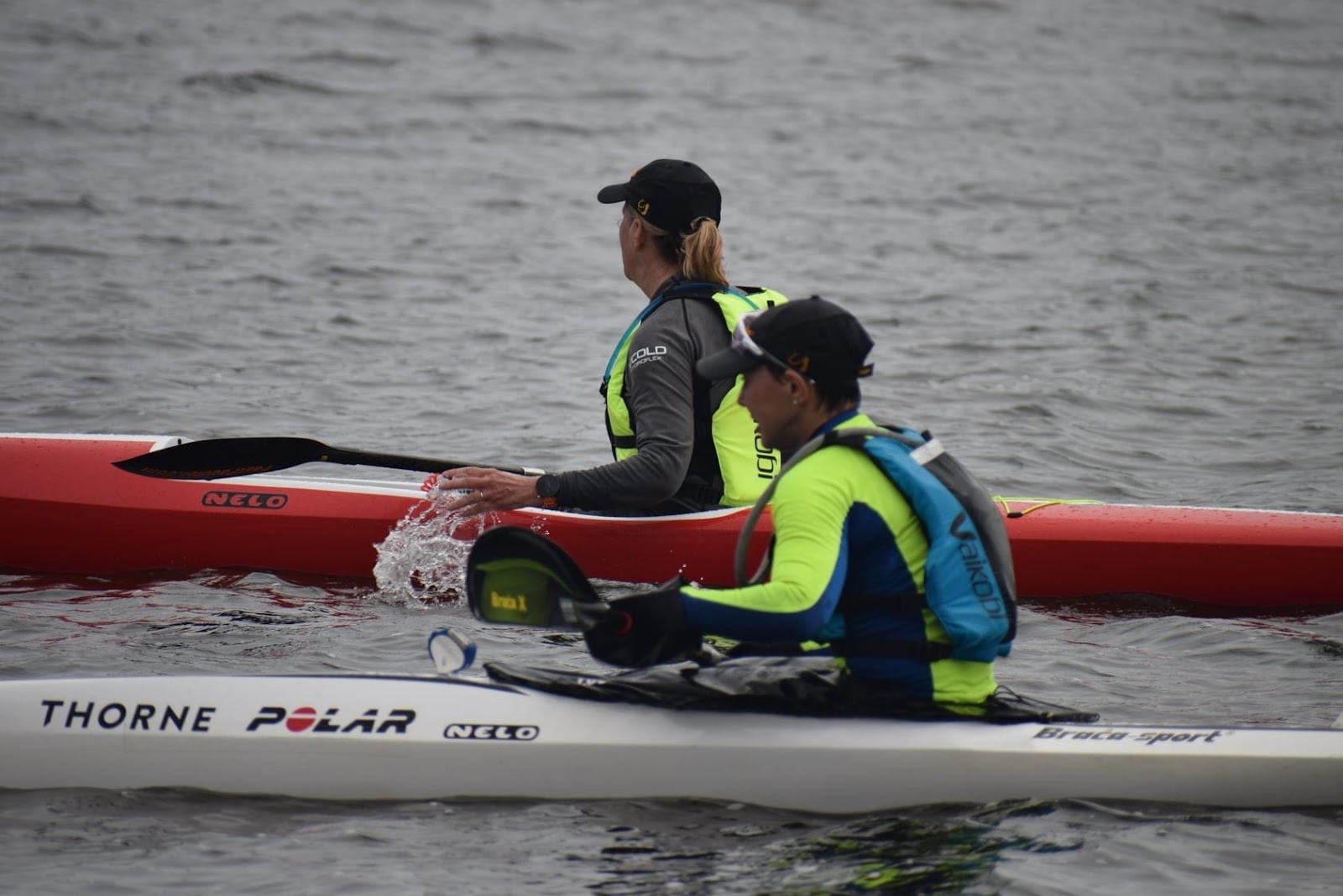
The speed training and other myths that are slowing you down

Image
Speed training is an essential component of performance in many racing sports but it is often butchered. Ideas, methods and personal opinions of training schemes and speed training methods that are not supported by science or consistent results are still far too common. I thought it may be fun to outline below a few myths related to endurance and speed-endurance in sports including kayaking and how these may actually block you from progressing and getting faster. Myth 1 : Higher average speed at training days or races means you are getting faster Being able to generate faster speeds for a longer time may increase your average speed or even top-end speed on a training day or during a race. Observing such metrics is not a bad idea, however, these should be put in the right context and within a carefully outlined training plan. They should be part of monitoring progress in the long haul and not be indicative of performance (either personal or boat-specific) during random training days or...

2018 ETU European Championships - adapting to changes and the art of tapering

Image
Following the ITU long course World Championships in July, Dave and I made a last minute change to our plans and decided to extend my season just a couple of months to race the ETU middle distance European Championships in October. It was my first time to extend the racing season outside the initial plans and go through another mini-training cycle, which meant: rest, build and peak again within two and a half months. It actually went pretty well. The tapering weeks were a touch more dramatic in terms of the intensity build-up and volume reduction but, to my surprise, my body reacted well. I never like my tapering weeks. I have no idea why everybody gets so excited about it. I personally, really start feeling better only 1-2 days before the race. The remaining of the time, I feel out of whack, usually sleepy, flat and not with much speed. Our tapering typically lasts 1-3 weeks before the race day. The timing depends on the race distance and the amount of training I have done in ...

The mid-season hump and how to get over it

Image
I am not sure if this happens to all age-grouper triathletes but it certainly makes its appearance the more systematic, the more senior, and the more endurance-focused you are in the sport. Mid-season hump is that training phase right in the middle of the season, where you are still putting long, base miles, you have not started your overload phase and you have not started racing yet. The initial enthusiasm of the new season has worn off, you feel a bit bored and tired and you are just so ready for a change! The way I am trying to get out of these mid-season blues is not always the same but what usually works for me are just the simple things: 1. Once in a while, I break up a very long workout into two chunks: one with the sport I am supposed to do and another with a different sport of equivalent aerobic value. For example: I have a long run. I then do 80% of it and replace the other 20% with a very long hike. Or, I have a long bike ride. Then, I do most of it and replace the re...

2017 ITU Long Course World Championships reflections

Image
I put a lot of hours and a lot of energy leading into the ITU LD World Championships this year. I was essentially getting up at 4:30 am every morning, training, eating, going to work, training again, eating and sleeping, for 45 weeks straight. The pure training volume (excluding walking and stretching) was set at a base of around 12-15hrs a week and topped to 21hrs leading to the big race. I did not face any injuries or other setbacks and was feeling good throughout. I did my first marathon in March at the beginning of the season, won a couple of local races (half and olympic distances), swam 15 ocean mile swims and I was feeling confident. On the actual race day, many things did not go right. I do not like to make excuses but the truth is that on race day, my planets just did not align right. I was down with fever during my tapering week but did not make a big deal out of it nor complained. On race week, I started feeling better but I was not at my very best on race day. That morn...

Top benefits from learning and practicing flip turns

Image
I am definitely not the fastest swimmer in the field but I work hard, smart and persistently to improve my weakest discipline: swimming. Since I started triathlons, I had one and only one motivation line: "If you want to get better in a sport you have to be an athlete of the sport". Do you want to be a better swimmer? Then, you need to do what swimmers do.  Simple and straightforward. I understand that there is a lifelong debate whether triathletes gain benefits from learning how to flip turn or not. I am not a high-performance coach nor a high-performance triathlete to make definitive claims here but this is what I have gained over the years of practicing and doing flip turns consistently and constantly. Practicing flip turns will make you incredibly faster on race day! 1. You maintain the continuity, the momentum and the rhythm of your swim. To give you an example: comparing flip turns with open turns or with stopping at the end of each lane is lik...

The six elements that prevent many amateur athletes from being professional

Image
Age group and amateur athletes share more characteristics with professional athletes than you may think. At the same time, amateur athletes lack features that professional athletes have mastered to perfection. In actuality, these features may play a much more significant role in success than plain physical parameters such as VO2 max, economy, lean muscle mass, metabolic efficiency and mental toughness. First, let's just try to see how success happens. Being successful as an athlete, amateur or professional alike, has nothing to do with the number of podium wins achieved. Podium wins are irrelevant. Whether you are an amateur athlete that has just started the sport or you have been doing it for a few or multiple years, whether you are a tier 2/3 (newbie) or a tier 1 (top 10 in the world) professional athlete, the podium does not define you. You can always find a relevant race somewhere in the world that you can probably earn a podium spot, regardless of your experience, level o...