Posts

Showing posts with the label endurance

The speed training and other myths that are slowing you down
Image
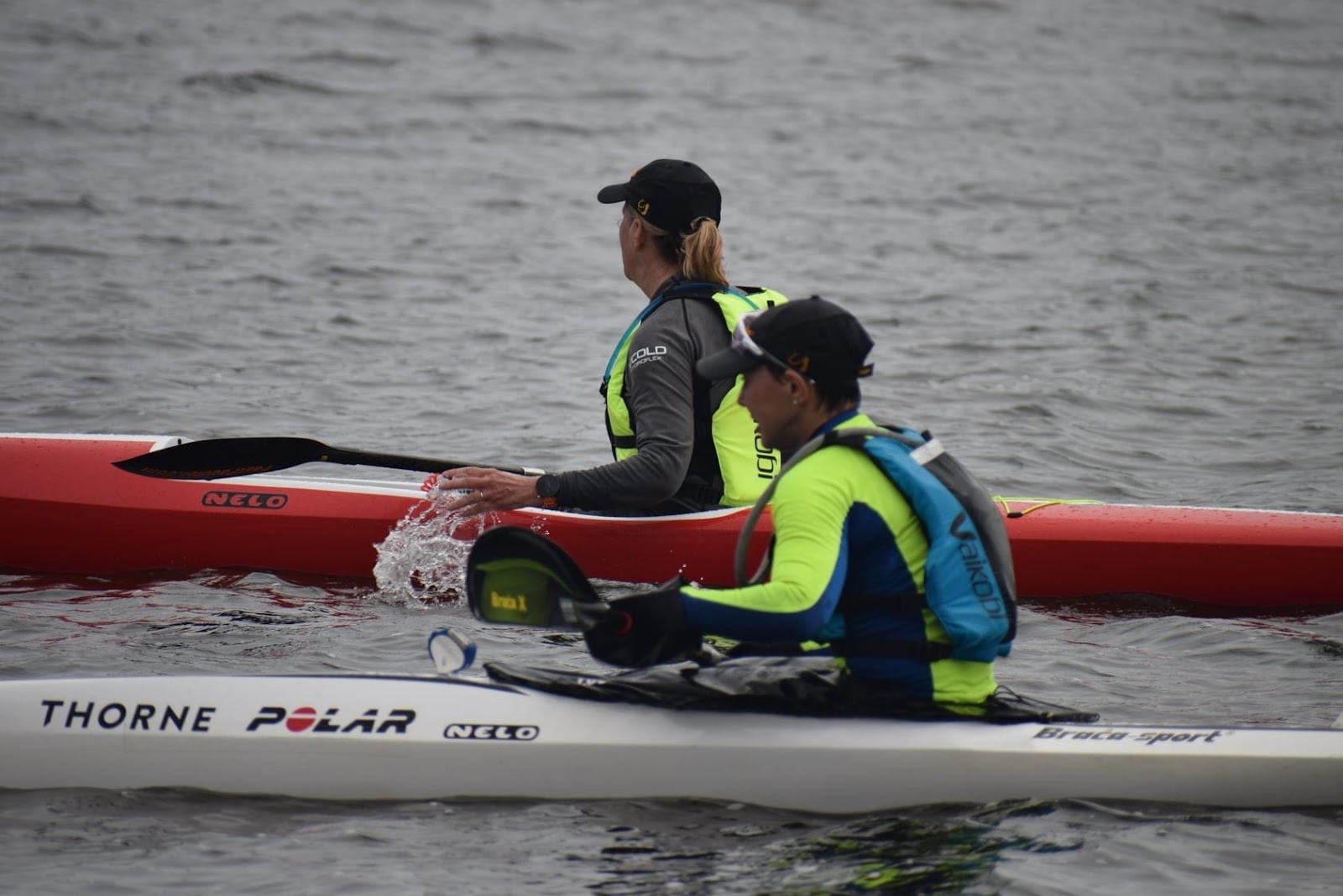
Speed training is an essential component of performance in many racing sports but it is often butchered. Ideas, methods and personal opinions of training schemes and speed training methods that are not supported by science or consistent results are still far too common. I thought it may be fun to outline below a few myths related to endurance and speed-endurance in sports including kayaking and how these may actually block you from progressing and getting faster. Myth 1 : Higher average speed at training days or races means you are getting faster Being able to generate faster speeds for a longer time may increase your average speed or even top-end speed on a training day or during a race. Observing such metrics is not a bad idea, however, these should be put in the right context and within a carefully outlined training plan. They should be part of monitoring progress in the long haul and not be indicative of performance (either personal or boat-specific) during random training days or...
Benefits of transcending all metabolic systems

Image
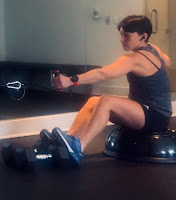
Have you tried to run immediately after a tough weight lifting session? Or, have you tried to lift heavy after a long run? It's pretty tough when you do it for the first time, whether you are a runner or a weight lifter or just a fitness pal. There is more to it than just being a difficult workout and there is a reason why weight lifters do not enjoy "cardio" workouts or why runners do not enjoy spending much time in the weight room. This is because our muscles utilize different metabolic systems to produce energy during an activity depending on the duration and the intensity of the activity. Jumping from one system to another is not a smooth transition. During a workout, our muscles utilize a various avenues to seek energy and do the job we are asking them to do. Depending on how hard or how long we ask them to perform, they tap into the following three energy paths: ATP-phosphocreatine (ATP-PC), glycolysis and aerobic metabolism or a combination of those. Typically, for...

Why First Endurance is NOT just another nutrition company

Image
If you are an endurance athlete and you have not tried the First Endurance products yet, let me clarify that what you will read below is a truthful opinion of my personal experience on collaborating with the company and on using their products. It is not biased  and it does not serve any kind of advertisement purposes. If you are an endurance athlete and you have tried the First Endurance products, you know that these products are made of high-quality ingredients and they actually work. ------------------------------------------------------------------------------------------------------------------- I joined the First Endurance Research Board back in the early 2013 and since then, I have been loving every moment of scientific, non-scientific, athletic and non-athletic interaction with the company. My role in First Endurance is to conduct research on various topics that span the nutritional science and deal with the dietary demands of the endurance athlete. I am part of a ...

New 2015 season. Shaping up, building up and racing pain-free

Image
My new season is slowly getting into a proper routine of training and preparing for 2015. My dear Lord, it has been a long two-year anticipation of trying to resolve my abdominal pain mystery (see Shaping up for 2015 ). I am really excited to have that finally under control and be able to work around it, train successfully and plan for the upcoming months. I have been working on my swimming technique (see The path to becoming a more efficient swimmer ) and I have also been putting long miles on the bike. My running is still at a base-line as I only started running again a month ago. I have had some test-fitness races earlier this month. These races showed that my fitness is at a good level, both endurance-wise (3rd at the first round of the southeast endurance 6hr solo mtb cup) and speed-wise (3rd at the annual 11mi Cumming TundraTT). Cumming Tundra TT podium South-East Championships (round#1)  6hr solo mtb podium For the coming months, the plan includes a gradual...

The path to becoming a more efficient swimmer

Image
I am a triathlete. I did not grow up swimming. Sounds familiar? This is me as this is with a lot of triathletes out there. I never really paid attention during the first year of training and racing-I just practiced and practiced and practiced. My 2011-2012 season showed that I could have some potential in triathlons but it ended prematurely (due to a deep abdominal pain) with my 4th finish at the Collegiate Nationals ( Lili 2011-2012 racing season ). I was hit with and unknown injury (see An unknown injury ) and as a result, I lost the two following seasons trying to resolve my problem. During these seasons, I could not run as much or as fast as I wanted because I was constantly in pain. The good thing though was that I could focus on my swim and on the bike (see How I trained through my injury  and  Swimming technique facts ). With Mike Cantrell The "junk" swim miles got substituted this year with real technique work under the supervision of my husband, who is al...

Can Hard Work outperform Talent?

Image
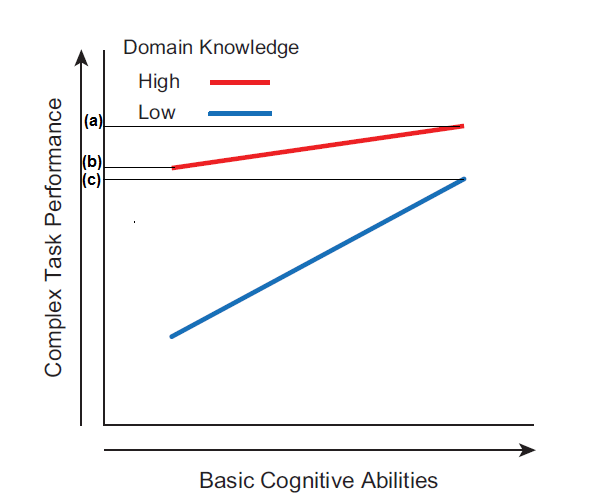
Yesterday, I came across this recent publication in the Association for Psychological Science, written by Hambrick and Meinz*. Quite successfully, the authors illustrate their arguments on the oh-so-debatable, "talent" vs "hard work" for success and performance. The first to introduce this debate scientifically was Dr. Ericsson from Florida State University in 1996. To remind you or inform you if you haven't heard, Ericsson's theory is based on the concept that one needs 10,000 hours in order to acquire expert performance in a field of science, music, art, sport or other complex domains. (more: http://www.psy.fsu.edu/faculty/ericsson.dp.html ) I will not overload you with technical terms and complicated graphs but I will just discuss a little how perplex this matter is. Based on their own research and on a series of experiments, Hambrick and Meinz, conclude that basic abilities (i.e., "talent") can predict success but acquired characteristics (i...