Posts

Showing posts with the label hard training

The speed training and other myths that are slowing you down
Image
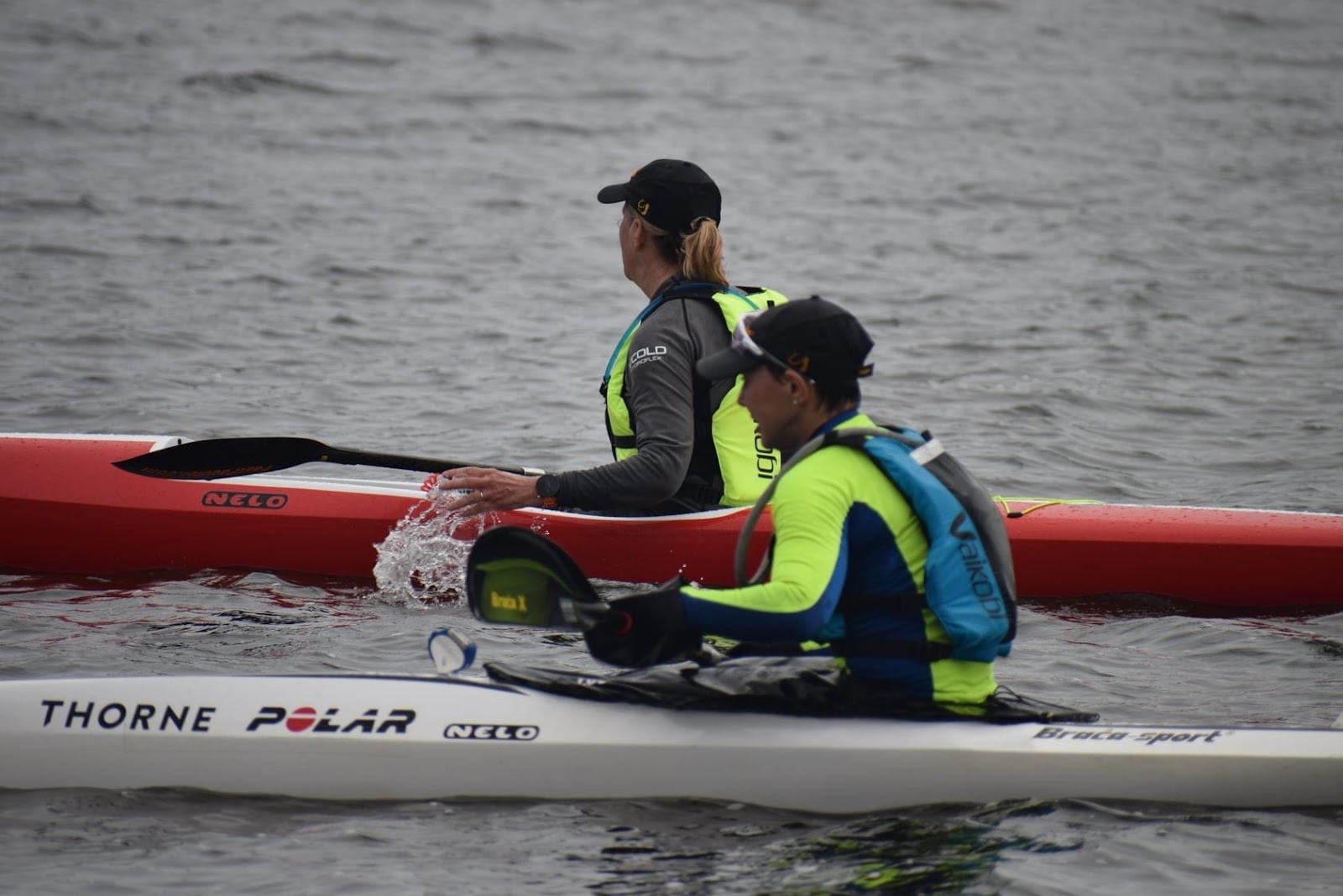
Speed training is an essential component of performance in many racing sports but it is often butchered. Ideas, methods and personal opinions of training schemes and speed training methods that are not supported by science or consistent results are still far too common. I thought it may be fun to outline below a few myths related to endurance and speed-endurance in sports including kayaking and how these may actually block you from progressing and getting faster. Myth 1 : Higher average speed at training days or races means you are getting faster Being able to generate faster speeds for a longer time may increase your average speed or even top-end speed on a training day or during a race. Observing such metrics is not a bad idea, however, these should be put in the right context and within a carefully outlined training plan. They should be part of monitoring progress in the long haul and not be indicative of performance (either personal or boat-specific) during random training days or...

2018 ITU long course World Championships thoughts and the fear of failure in modern amateur sports

Image
I have been a triathlete for 7 years now. Along these years of training and racing, I have found that many of my fellow athletes fail to set a goal and go after it. This is because a goal that is achievable and challenging enough requires a lot more work than one may think and more importantly, it involves a high probability of failing. I think a lot of athletes nowadays are afraid to fail. This is one of the reasons why they often use the excuse of "I just want to have fun" to justify their lack of focusing, their races where they "had a bad day" and their multi-distance/multi-disciplinary plans: "I want to race an Ironman, a SUP race, a tough mudder, a 6hr endurance MTB and win the National Road bike and time trial races this year". Having fun is paramount and trying out different sports and distances is definitely a lot of fun. However, a lot of these athletes that "just want to have fun" are highly competitive. Despite being highly c...

The mid-season hump and how to get over it

Image
I am not sure if this happens to all age-grouper triathletes but it certainly makes its appearance the more systematic, the more senior, and the more endurance-focused you are in the sport. Mid-season hump is that training phase right in the middle of the season, where you are still putting long, base miles, you have not started your overload phase and you have not started racing yet. The initial enthusiasm of the new season has worn off, you feel a bit bored and tired and you are just so ready for a change! The way I am trying to get out of these mid-season blues is not always the same but what usually works for me are just the simple things: 1. Once in a while, I break up a very long workout into two chunks: one with the sport I am supposed to do and another with a different sport of equivalent aerobic value. For example: I have a long run. I then do 80% of it and replace the other 20% with a very long hike. Or, I have a long bike ride. Then, I do most of it and replace the re...

The neurological recovery after a long season

Image
My coach says: "The longer the season, the longer the recovery phase" At a first thought, it sounds reasonable. Most of us, when we hear the word "recovery", we think immediately about resting our bodies, not working out much, lying on the couch or socializing, eating lots and gathering energy for the next training phase. Although resting muscles and joints is paramount for the hard training athlete - especially the long distance athlete - resting the brain and the neurological canals that feed body and soul is far more critical for a healthy, new season. I have never actually experienced the neurological post-season fatigue as much as this past season. 2017 was a truly great season for me: I built up the volume right, I had no major injuries and setbacks and I had a three month transition (break) between jobs that I utilized to max out my training and recovery. I bettered my race time at the same distance by a whole 1 hour and 10 min compared to last years resu...

USAT Long Course National Championships ~ my qualification for the World Championships

Image
All it takes is a lot of patience, practice, smart preparation, a good strategy, a good nutrition plan, an intelligent coach and an athlete who listens and executes. Patience : 3 1/2 years since I completed a major race (4th at the Collegiate Nationals in 2012) without any pain in my abdominal muscles (see: New 2015 season. Shaping up, building up and racing pain-free )  Practice : I never stopped working out during the past 3 years. I couldn't run for two years but I biked a lot and worked religiously on my swim! Smart preparation : We only had 8 weeks. I lacked running volume and we increased the mileage very slowly but steadily up to one week before the race. Because we did not do any running intervals, all the intensities (endurance threshold, aerobic/anaerobic and VO2 max workouts) were done in the water (swimming).  Good strategy : My racing plan was very specific: do your best in the swim, take it out a little slower and negative split on the ...

How it feels during the progressive overload training period

Image
Let's first make something clear: Before you jump into an overload training phase, you need to have a coach who understands very well the concept behind the periodization training plan and who can apply it specifically to you and adjust it along the way depending on the circumstances and your unique, personal needs. You can read more about it in one of my previous posts here: The porgressive overload as part of a periodization training plan When it's time to enter the progressive overload period of my training plan, I have just come out from the base and transition periods. The former (base) requires lots of slow, long miles and the latter (transition) lots of sort, power exercises that make different muscle groups work one after the other. Before the overload period, I probably weigh 2 to 4 pounds more, I feel a little tired but not worn out, and I may (or may not!) get a week of easy workouts: every day I would do about 1 hour of easy spin or 20min of jogging or 45m...