Posts

Showing posts with the label sprints

Faster running times: Negative splitting

Image
If you want to run a faster 5K or a marathon or just get better in the running leg of a triathlon you gotta learn to tune with your body and understand what is often called, perceived effort. The majority of the runners out there start out a little faster than they can maintain over the course of the race and gradually slow down their pace or fade out. They may run a fast time this way but the question is: could it be faster with negative splitting? There has been lots of discussion on the subject over the years and there are lots of examples on elite athletes racing with different strategies. Excluding the exceptions (exceptions always exist to general rules) most records have been broken either by even splitting or negative splitting. The latter is what describes the time of the second half being faster than the time of the first half. And this is hard to accomplish. Understanding how fast you should go during the first half so that you can save a tiny bit to run the second ...
Can Hard Work outperform Talent?

Image
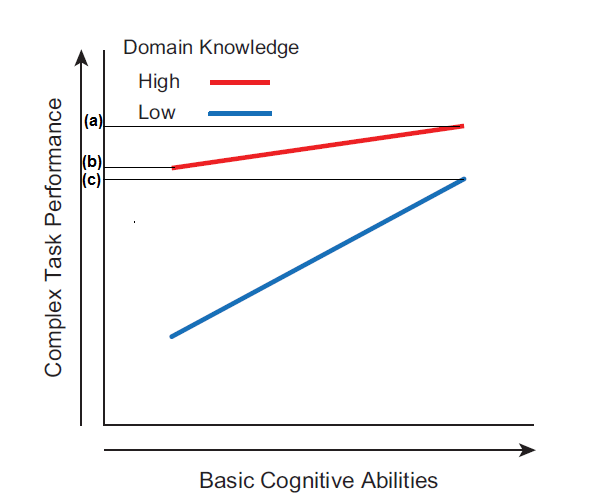
Yesterday, I came across this recent publication in the Association for Psychological Science, written by Hambrick and Meinz*. Quite successfully, the authors illustrate their arguments on the oh-so-debatable, "talent" vs "hard work" for success and performance. The first to introduce this debate scientifically was Dr. Ericsson from Florida State University in 1996. To remind you or inform you if you haven't heard, Ericsson's theory is based on the concept that one needs 10,000 hours in order to acquire expert performance in a field of science, music, art, sport or other complex domains. (more: http://www.psy.fsu.edu/faculty/ericsson.dp.html ) I will not overload you with technical terms and complicated graphs but I will just discuss a little how perplex this matter is. Based on their own research and on a series of experiments, Hambrick and Meinz, conclude that basic abilities (i.e., "talent") can predict success but acquired characteristics (i...