Posts

Showing posts with the label coach

A great coach is hard to find and impossible to forget

Image
If there was an attention deficit disorder in sports, I think I could serve as a prime example. Growing up, nobody in my family understood or encouraged sports, and in actuality, my parents put an effort to limit any kind of physical activity over mental pursuits. But because my heart was always in for the physical challenges and not so much for the mental ones, from the moment I broke loose from home at the age of 19, I have been jumping around the elite sports arena for more than two decades. Spanning different sports in different countries and going through a variety of clubs and coaching systems, I have learned that evidently, there is no right or wrong method when it comes to ways of improving human performance in any sport. A lot comes into the athlete's physicality and mentality as a whole, and some scientific knowledge plays a role but the majority of success boils down to the coach's quality and skillset that can bring it all together. Generally speaking, it's easy...
The speed training and other myths that are slowing you down

Image
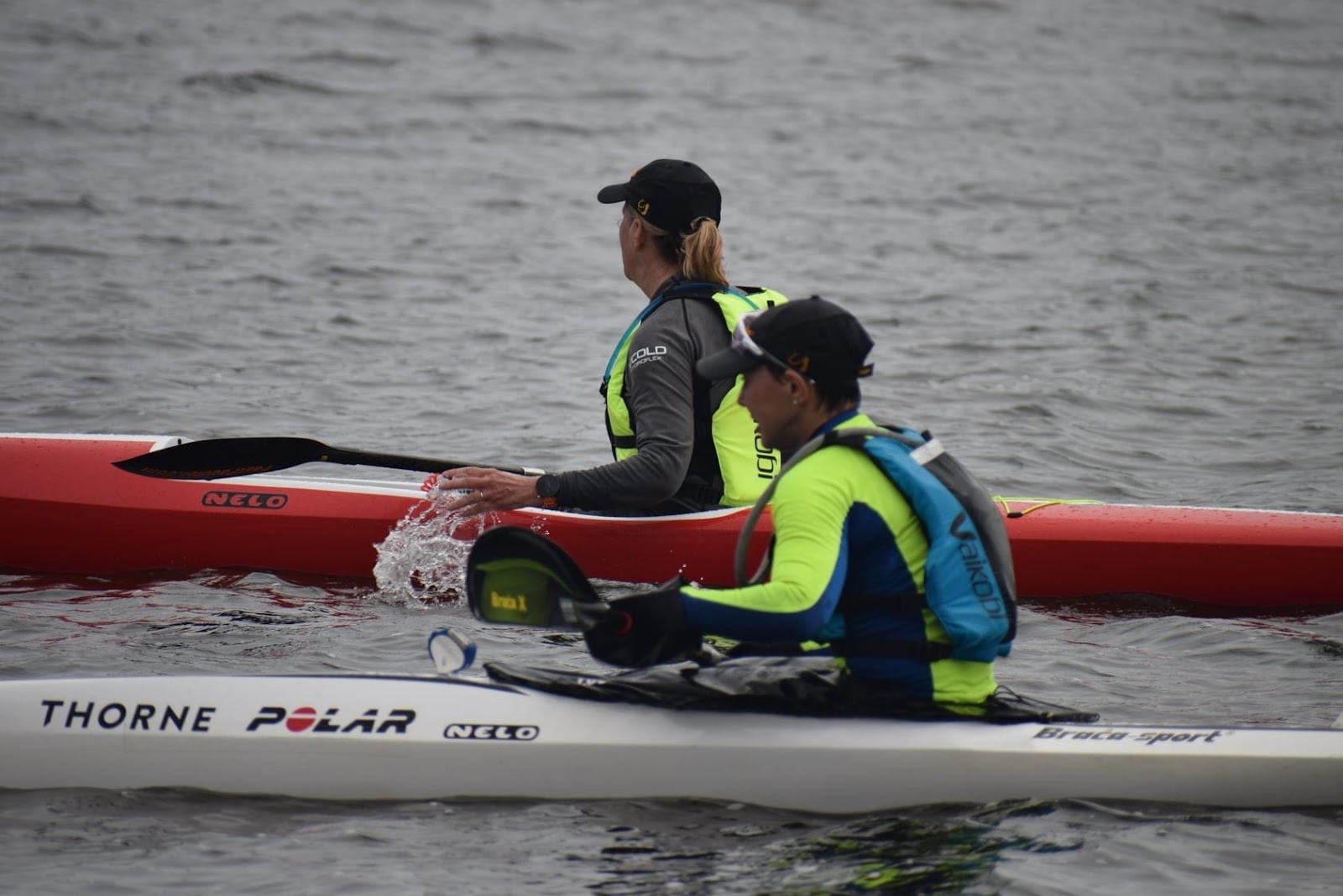
Speed training is an essential component of performance in many racing sports but it is often butchered. Ideas, methods and personal opinions of training schemes and speed training methods that are not supported by science or consistent results are still far too common. I thought it may be fun to outline below a few myths related to endurance and speed-endurance in sports including kayaking and how these may actually block you from progressing and getting faster. Myth 1 : Higher average speed at training days or races means you are getting faster Being able to generate faster speeds for a longer time may increase your average speed or even top-end speed on a training day or during a race. Observing such metrics is not a bad idea, however, these should be put in the right context and within a carefully outlined training plan. They should be part of monitoring progress in the long haul and not be indicative of performance (either personal or boat-specific) during random training days or...

The mid-season hump and how to get over it

Image
I am not sure if this happens to all age-grouper triathletes but it certainly makes its appearance the more systematic, the more senior, and the more endurance-focused you are in the sport. Mid-season hump is that training phase right in the middle of the season, where you are still putting long, base miles, you have not started your overload phase and you have not started racing yet. The initial enthusiasm of the new season has worn off, you feel a bit bored and tired and you are just so ready for a change! The way I am trying to get out of these mid-season blues is not always the same but what usually works for me are just the simple things: 1. Once in a while, I break up a very long workout into two chunks: one with the sport I am supposed to do and another with a different sport of equivalent aerobic value. For example: I have a long run. I then do 80% of it and replace the other 20% with a very long hike. Or, I have a long bike ride. Then, I do most of it and replace the re...

2017 ITU Long Course World Championships reflections

Image
I put a lot of hours and a lot of energy leading into the ITU LD World Championships this year. I was essentially getting up at 4:30 am every morning, training, eating, going to work, training again, eating and sleeping, for 45 weeks straight. The pure training volume (excluding walking and stretching) was set at a base of around 12-15hrs a week and topped to 21hrs leading to the big race. I did not face any injuries or other setbacks and was feeling good throughout. I did my first marathon in March at the beginning of the season, won a couple of local races (half and olympic distances), swam 15 ocean mile swims and I was feeling confident. On the actual race day, many things did not go right. I do not like to make excuses but the truth is that on race day, my planets just did not align right. I was down with fever during my tapering week but did not make a big deal out of it nor complained. On race week, I started feeling better but I was not at my very best on race day. That morn...

Top benefits from learning and practicing flip turns

Image
I am definitely not the fastest swimmer in the field but I work hard, smart and persistently to improve my weakest discipline: swimming. Since I started triathlons, I had one and only one motivation line: "If you want to get better in a sport you have to be an athlete of the sport". Do you want to be a better swimmer? Then, you need to do what swimmers do.  Simple and straightforward. I understand that there is a lifelong debate whether triathletes gain benefits from learning how to flip turn or not. I am not a high-performance coach nor a high-performance triathlete to make definitive claims here but this is what I have gained over the years of practicing and doing flip turns consistently and constantly. Practicing flip turns will make you incredibly faster on race day! 1. You maintain the continuity, the momentum and the rhythm of your swim. To give you an example: comparing flip turns with open turns or with stopping at the end of each lane is lik...

The six elements that prevent many amateur athletes from being professional

Image
Age group and amateur athletes share more characteristics with professional athletes than you may think. At the same time, amateur athletes lack features that professional athletes have mastered to perfection. In actuality, these features may play a much more significant role in success than plain physical parameters such as VO2 max, economy, lean muscle mass, metabolic efficiency and mental toughness. First, let's just try to see how success happens. Being successful as an athlete, amateur or professional alike, has nothing to do with the number of podium wins achieved. Podium wins are irrelevant. Whether you are an amateur athlete that has just started the sport or you have been doing it for a few or multiple years, whether you are a tier 2/3 (newbie) or a tier 1 (top 10 in the world) professional athlete, the podium does not define you. You can always find a relevant race somewhere in the world that you can probably earn a podium spot, regardless of your experience, level o...

Racing: how often, how hard and the art of tapering

Image
I have heard controversial approaches about the age-group athlete and the approach to racing. Some believe that amateur athletes should really focus and taper for one race a year, others believe that athletes should rest plenty before every single race. Similarly, some coaches do not chose to race the athlete a lot, others believe that this approach takes away the fun and they chose to race the athlete as much as the athlete wants. There is no right or wrong approach to that but there are some physiological parameters that are true and there is also a fundamental question that needs to be addressed to the athlete before any decision made: "How long is your goal race? How much and how well do you want to perform at that one race? Are you ok with a good performance or you want to be at your absolute best?" I find that a lot of my fellow athletes are racing by wanting to do well at every single race. And this is great and if that satisfies them it is even greater! ...

USAT Long Course National Championships ~ my qualification for the World Championships

Image
All it takes is a lot of patience, practice, smart preparation, a good strategy, a good nutrition plan, an intelligent coach and an athlete who listens and executes. Patience : 3 1/2 years since I completed a major race (4th at the Collegiate Nationals in 2012) without any pain in my abdominal muscles (see: New 2015 season. Shaping up, building up and racing pain-free )  Practice : I never stopped working out during the past 3 years. I couldn't run for two years but I biked a lot and worked religiously on my swim! Smart preparation : We only had 8 weeks. I lacked running volume and we increased the mileage very slowly but steadily up to one week before the race. Because we did not do any running intervals, all the intensities (endurance threshold, aerobic/anaerobic and VO2 max workouts) were done in the water (swimming).  Good strategy : My racing plan was very specific: do your best in the swim, take it out a little slower and negative split on the ...

The path to becoming a more efficient swimmer

Image
I am a triathlete. I did not grow up swimming. Sounds familiar? This is me as this is with a lot of triathletes out there. I never really paid attention during the first year of training and racing-I just practiced and practiced and practiced. My 2011-2012 season showed that I could have some potential in triathlons but it ended prematurely (due to a deep abdominal pain) with my 4th finish at the Collegiate Nationals ( Lili 2011-2012 racing season ). I was hit with and unknown injury (see An unknown injury ) and as a result, I lost the two following seasons trying to resolve my problem. During these seasons, I could not run as much or as fast as I wanted because I was constantly in pain. The good thing though was that I could focus on my swim and on the bike (see How I trained through my injury  and  Swimming technique facts ). With Mike Cantrell The "junk" swim miles got substituted this year with real technique work under the supervision of my husband, who is al...

Faster running times: Negative splitting

Image
If you want to run a faster 5K or a marathon or just get better in the running leg of a triathlon you gotta learn to tune with your body and understand what is often called, perceived effort. The majority of the runners out there start out a little faster than they can maintain over the course of the race and gradually slow down their pace or fade out. They may run a fast time this way but the question is: could it be faster with negative splitting? There has been lots of discussion on the subject over the years and there are lots of examples on elite athletes racing with different strategies. Excluding the exceptions (exceptions always exist to general rules) most records have been broken either by even splitting or negative splitting. The latter is what describes the time of the second half being faster than the time of the first half. And this is hard to accomplish. Understanding how fast you should go during the first half so that you can save a tiny bit to run the second ...

A mature athlete has the right mindset

Image
Maturing as an athlete is a lot more than just getting faster or becoming more efficient. I believe that what makes an athlete mature is a great mindset.  From my own small-world perspective, my athletic attitude has changed dramatically over the years. I remember my first season that started in October 2011: I was restless. I wanted to train every day. The more the better. I was getting excited with every little success, from clocking faster 5K times every month to winning the smallest local race in town. I was also getting depressed easily: whenever my knee was hurting or my shoulder was pinching. I was becoming really pessimistic if I had to take time off training in order to deal with smaller or bigger injuries. I remember I was crying for days when I had to stop swimming for nearly 4 months to rehab my left shoulder from chronic rotator cuff injury: I went to the 2012 Collegiate Nationals having practiced 0 swimming for 4 months (I finished 4th overall). The majo...

Coach Dave Williams answers questions

Image
This is from last year's interview (2013) of my coach at TriathlonWorld (TW) online magazine [ link ] Dave Williams has served as a Cross Country Head Coach at Flagler college for 14 years and a Swimming Head Coach at Episcopal High School and St. Augustine Swim Teams for 8 years. In a coaching career that spans over two decades, Dave Williams has earned 13 Coach of the Year awards while guiding teams to numerous conference and regional championships. While at Flagler, Williams has qualified an unprecedented 44 individuals to intercollegiate national championships. Williams has served on the Florida Swimming Technical Planning Committee, the NAIA Cross Country Rating Committee, seven terms as the Cross Country Chair for the Florida Sun Conference, and four terms as the Cross Country Chair for Region XIV. He is now the Associate Director of the Campus Recreational Center (CRC) of the Georgia Institute of Technology (Atlanta, GA), which is the former host of the 1996 Olympic G...

The purpose of physiological testing by coach Dave Williams

Image
A note from the coach. [Read his most recent interview here:  Best Coaches Special ] Physiological testing can provide information regarding an athlete’s strengths and weaknesses in the chosen sport.  The chosen test should therefore be as sport specific as possible to glean the most accurate results. Physiological testing should be used to provide feedback to the athlete about the effectiveness of the training program. Physiological testing should also be used to educate the athlete about the physiology of exercise so that they may be more likely to make better decisions regarding their training and racing preparation. In determining which physiological test to utilize the athlete/coach should consider the physiological variables to be tested and ensure that they are relevant to the sport. The test should also be repeated at specific intervals and measured against the training response.  Results can be instrumental in predicting race performance,...